How to choose a licensed roofing contractor in Washington
A licensed roofing contractor in Washington carries a state registration, active liability and workers' comp coverage, and a written bid. Here's how to verify all three.
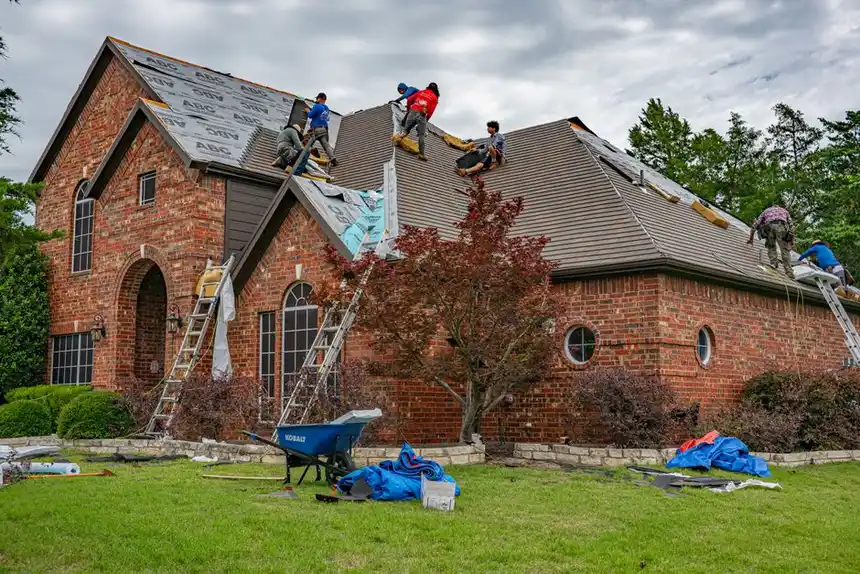
Choosing a licensed roofing contractor in Washington comes down to three verifiable things: an active Washington contractor registration, current liability and workers' compensation insurance, and a written bid that lists materials, tear-off, and disposal. Everything else - reviews, references, warranty terms - is a tiebreaker between contractors who already pass those three checks. If a roofer can't produce all three before you sign, you're not hiring a contractor, you're taking on the risk yourself.
We're a Washington roofing company, and we've been called out to fix work that unlicensed crews left behind across the Puget Sound region and eastern Washington. This guide walks through what the state actually requires, how to verify it in about ten minutes, the questions that separate a real roofer from a storm chaser, and the red flags we see most often.
What a Washington roofing license actually is
A Washington roofing contractor license is a state-issued registration through the Department of Labor & Industries that allows a business to legally bid and perform roofing work in the state. Washington doesn't license roofers trade-by-trade the way some states do. Instead, it registers the contractor - the business entity - and requires that entity to carry a bond, liability insurance, and workers' comp before it can pull permits or sign contracts.
That distinction matters. A crew of guys with nail guns and a truck isn't a licensed contractor, even if the guy holding the clipboard says he's been roofing for twenty years. The registration belongs to a business with a UBI number, a registered agent, and a bond on file. If the business doesn't exist on paper, the license doesn't exist either.
Roofing is classified as a specialty contractor trade in Washington. The registration covers residential and commercial roofing, but a roofer who only does residential work may not carry the endorsements needed for certain commercial or steep-slope jobs. If your project involves a flat membrane roof on a commercial building, ask specifically whether the contractor's registration covers that scope.
Why the bond matters more than the license number
The bond is the part homeowners skip, and it's the part that protects you. Washington requires registered contractors to carry a surety bond for general and specialty contractors. If a contractor takes your deposit and disappears, or does work that fails code and refuses to fix it, you can file a claim against that bond.
No bond, no recourse. That's the whole point. A contractor who's registered but has let their bond lapse is functionally unlicensed, and the state will flag it.
How do I verify a roofing contractor license in Washington?
You verify a Washington roofing contractor license in about five minutes by searching the contractor's UBI or business name on the Department of Labor & Industries contractor lookup tool, then confirming the status reads Active and the bond and insurance dates are current. If the status says expired, suspended, or "not found," stop there.
Here's the exact sequence we tell homeowners to run:
- Ask the contractor for their UBI number and business name - not the salesperson's name, the business name.
- Search that UBI on the L&I contractor lookup.
- Confirm the status is Active and the expiration date hasn't passed.
- Check the bond amount and the insurance certificate dates.
- Cross-check the business name against the name on your contract and the name on the truck.
That last step catches a common trick. A salesman will hand you a card with one company name, but the contract you sign names a different LLC that's never been registered. If the names don't match, you're not covered by the bond you just verified.
We hand every homeowner our UBI number before they ask. If a roofer gets defensive about that request, that's your answer.
Roofing contractor insurance Washington homeowners should confirm
Roofing contractor insurance in Washington has two parts you need to see: general liability and workers' compensation. General liability covers damage to your home - a dropped bundle through your ceiling, a ladder through a window. Workers' comp covers the crew if someone falls off your roof. Both are required for a registered contractor, and both protect you from a lawsuit.
Ask for a certificate of insurance and call the agent listed on it. Don't just look at the paper. Certificates get forged, and policies get cancelled mid-job. A two-minute call to the agent confirms the policy is active on the date you're hiring.
Here's what each policy actually does for you:
- General liability - pays for property damage the crew causes to your home, your landscaping, or your neighbor's property.
- Workers' comp - pays medical bills and lost wages if a worker is injured on your roof. Without it, that worker can come after your homeowner's policy.
- Commercial auto - covers the truck and trailer parked in your driveway. Minor, but worth confirming.
If a contractor says they're "self-insured" or "the crew handles their own insurance," walk. In Washington, that almost always means no coverage, and you're the one holding the bag when someone gets hurt.
Questions to ask a roofing contractor in Washington
Questions to ask a roofing contractor in Washington should cover licensing, insurance, materials, timeline, and payment terms - and you should get written answers, not verbal ones. A contractor who's done this for years will have answers ready. A storm chaser will get vague fast.
Ask these ten, in this order:
- What's your UBI number and business name as registered with L&I?
- Can I see your certificate of insurance, and can I call your agent?
- Who's the manufacturer you're certified with, and what warranty does that unlock?
- What's the full scope - tear-off, underlayment, flashing, ventilation, disposal?
- How many layers are on my roof now, and does the bid include removing all of them?
- What's the payment schedule, and how much is due at signing?
- Who's the crew lead on my job, and are they employees or subs?
- What's the timeline from tear-off to final inspection?
- What happens if it rains mid-job - how do you dry in?
- What's your process if I find a leak six months after you finish?
Question four is the one that separates real bids. A cheap quote that skips tear-off, reuses old flashing, or leaves the old underlayment in place isn't a cheaper roof - it's a shorter-lived roof. We've torn off plenty of "new" roofs that failed in five years because someone skipped the ice-and-water shield at the eaves.
Question nine matters more in western Washington than almost anywhere else in the country. We get roughly 38 inches of rain a year in Seattle and 150-plus rainy days. Any roofer who doesn't have a dry-in plan for a mid-job storm is guessing.
Licensed vs unlicensed roofing contractor in Washington
Licensed vs unlicensed roofing contractor in Washington isn't a small distinction - it's the difference between a bond you can claim against and no recourse at all. An unlicensed roofer can't legally pull a permit, can't be bonded, and typically can't get manufacturer certifications, which means the shingle warranty on your roof may be void from day one.
Here's the practical breakdown:
- Licensed: bonded, insured, can pull permits, eligible for manufacturer warranties, subject to L&I complaints and bond claims.
- Unlicensed: no bond, no verifiable insurance, no permits, no manufacturer warranty, no state recourse if the work fails.
The price gap between the two is usually 10-20%. That's the cost of the bond, the insurance, and the permit. If someone quotes you 40% under everyone else, they're not more efficient - they're skipping the parts that protect you.
We've walked into attics in roofing in Everett where a homeowner paid cash to a crew that vanished after the first rain, and the decking was already rotting. The repair cost more than the original roof would have.
What to watch out for: five red flags
The five red flags that should end the conversation immediately are: no UBI number, no certificate of insurance, a demand for full payment upfront, door-to-door sales after a storm, and a bid that's dramatically lower than every other quote. Any one of these is enough to walk away.
Here's what each one actually looks like in practice:
- No UBI number. They give you a business card with a phone number and nothing else. Real contractors have a UBI they can recite.
- No insurance certificate. "I'll get you a copy later." Later never comes, or the certificate names a different company.
- Full payment upfront. A deposit of 10-30% is normal. A demand for 100% before the truck shows up means they're funding the last job with your money.
- Storm-chaser sales. Out-of-state plates, a clipboard, and a story about "your neighbor just signed." These crews follow hail and wind events and are gone in three weeks.
- Lowball bid. If one bid is 40% under the others, they're cutting tear-off, flashing, or underlayment. You'll pay for it in five years.
One more: pressure to sign today for a "discount." Real contractors book jobs weeks out. Anyone who needs your signature in the next hour is working a script.
When to call a professional
Call a professional roofer the moment you see granules in the gutter, a ceiling stain that grows after rain, or shingles curling at the ridge - those are the three signals that a small repair is about to become a deck replacement. We handle roof repair in Washington year-round, and the difference between a repair and a replacement is usually how fast you called.
Late fall is the worst time to discover a problem. November in Washington means short days, wet shingles, and freezing temps at night in the passes. If you're seeing any of the signals above, get someone on the roof before the first hard freeze.
Our team at washington roofing solution runs full roof inspection in Washington with photo documentation, so you can see exactly what's happening up there before you decide anything. No pressure, no upsell - just the pictures and a straight answer about what the roof needs.
Frequently Asked Questions
How do I choose a licensed roofing contractor in Washington?
Then compare at least three written bids on scope, not just price. A contractor who passes all three checks and gives you a detailed written bid is the one to hire.
What license does a roofing contractor need in Washington?
Washington requires roofing contractors to hold a state contractor registration through the Department of Labor & Industries as a specialty trade. Ask for the UBI number and verify it on the L&I lookup.
How do I verify a roofing contractor's insurance in Washington?
Ask for a certificate of insurance, then call the agent listed on it to confirm the policy is active on your hire date. Don't rely on the paper alone - certificates get forged and policies get cancelled mid-job. You want both general liability (covers damage to your home) and workers' comp (covers injuries on your roof).
What questions should I ask a roofing contractor in Washington?
Ask for their UBI number, certificate of insurance, manufacturer certifications, full scope of work including tear-off and disposal, payment schedule, crew lead's name, and timeline. Also ask how they dry in the roof if it rains mid-job - that one matters more in western Washington than almost anywhere else in the country.
How much does a new roof cost in Washington in 2026?
Metal and standing-seam roofs cost more than asphalt shingle roofs. Get three written bids - the spread tells you who's cutting corners.
Get help with roofing in Washington
If you're ready to hire a licensed roofing contractor in Washington and want a straight bid with no pressure, call us at +1 (832) 520-2787. We'll verify our registration and insurance before you ask, walk the roof with you, and give you a written scope you can compare against anyone else's.